
1. Pathogenesis of Catheter-Related Bloodstream Infections
Central line-associated bloodstream infections (CLABSI) represent a significant cause of preventable morbidity, prolonged hospitalization, and excess healthcare expenditure. Infection occurs via two distinct contamination pathways:
- Extraluminal Contamination: Skin microorganisms (primarily Staphylococcus epidermidis, Staphylococcus aureus, and Candida species) migrate from the percutaneous entry wound along the external catheter tract during the first 7 to 10 days post-insertion.
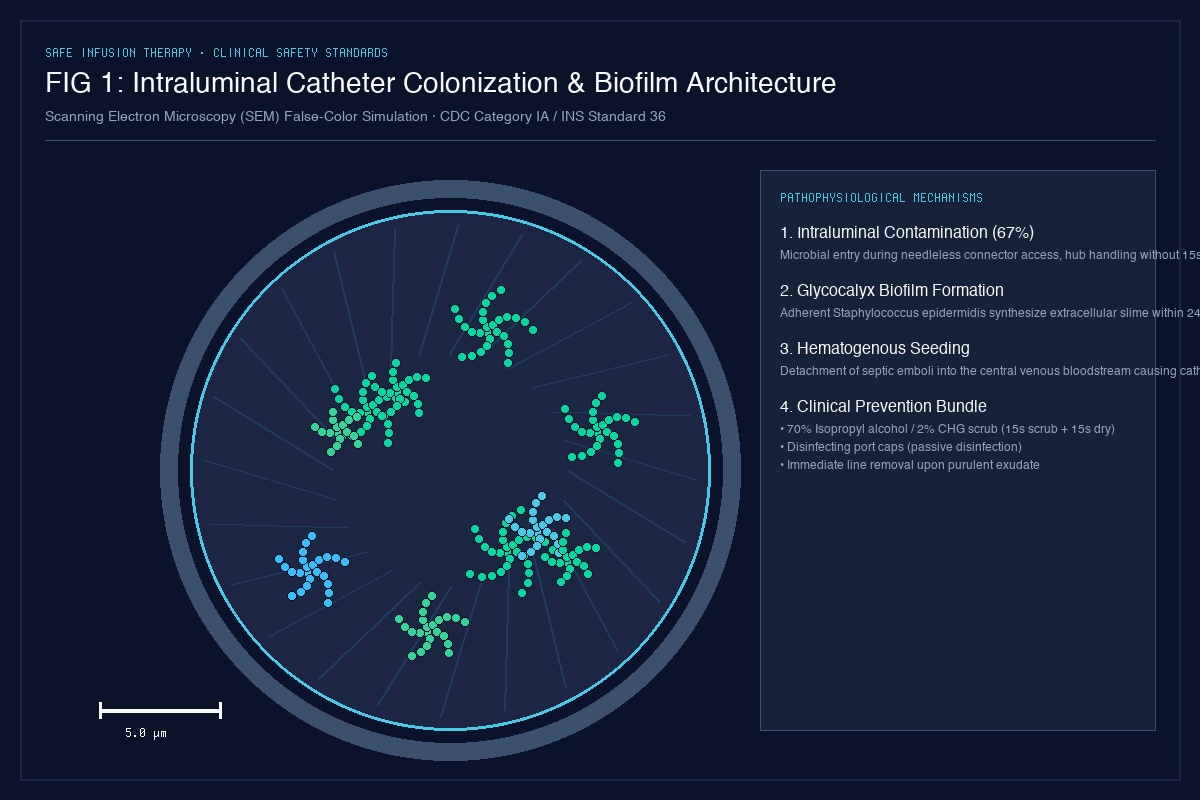
- Intraluminal Contamination: Direct microbial introduction through needleless connectors, stopcocks, or contaminated infusate during frequent line manipulation. Within 48 to 72 hours of catheter placement, adherent bacteria synthesize an extracellular polymeric substance (glycocalyx biofilm) that shields microbial colonies from systemic antibiotics and host immunological defense.
2. CDC Central Line Insertion & Maintenance Bundles
Adherence to multi-component clinical bundles reduces CLABSI rates by up to 70%. In accordance with CDC Guidelines and INS 2024 Standards, hospitals must enforce the following core interventions:
| Preventive Measure | Clinical Mechanism | Standard of Practice (CDC / INS 2024) | Evidence Level |
|---|---|---|---|
| Hand Hygiene | Eliminates transient pathogen carriage on clinician hands | Alcohol hand rub or soap wash before and after any line manipulation | Level I (A) |
| Maximal Sterile Barrier | Prevents airborne and field operative contamination during placement | Full sterile drape, sterile gown, mask with eye shield, sterile gloves, cap | Level I (A) |
| 2% CHG in 70% IPA Antisepsis | Rapid bactericidal and persistent residual antimicrobial activity | Back-and-forth friction scrub for 30s (dry) or 2 min (moist); 100% air-dry | Level I (A) |
| Scrub the Hub Protocol | Mechanical shearing and sterilization of intraluminal entry septum | Active scrub with 70% IPA or CHG for >=15 seconds active scrub + 15s dry | Level I (A) |
| CHG Sponge / Gel Dressing | Continuous release of CHG suppressing skin flora regrowth at entry | Indicated for all central vascular access devices in patients >=18 years | Level I (B) |
| Daily Necessity Review | Reduces cumulative catheter dwell time and bacteremia exposure | Multidisciplinary bedside rounds assessing prompt removal criteria | Level I (A) |
3. Needleless Connector Disinfection & Daily Catheter Audits
The needleless connector serves as the primary gateway for intraluminal contamination. Clinicians must actively scrub the hub with 70% isopropyl alcohol or chlorhexidine-alcohol wipes for a full 15 seconds, utilizing vigorous friction across the access septum and threads, followed by a complete 15-second air dry before accessing the catheter.
Alternatively, continuous passive disinfection caps containing 70% isopropyl alcohol sponges may be utilized. Passive caps provide continuous bactericidal protection while in place, but must be discarded upon removal and replaced after each access.
Central line necessity must be evaluated daily during multidisciplinary clinical rounds. As soon as intravenous access can be de-escalated to oral medications or peripheral lines, central catheters must be promptly removed to eliminate ongoing bloodstream infection hazard.